
Conde de los Andes, in the depths of wine
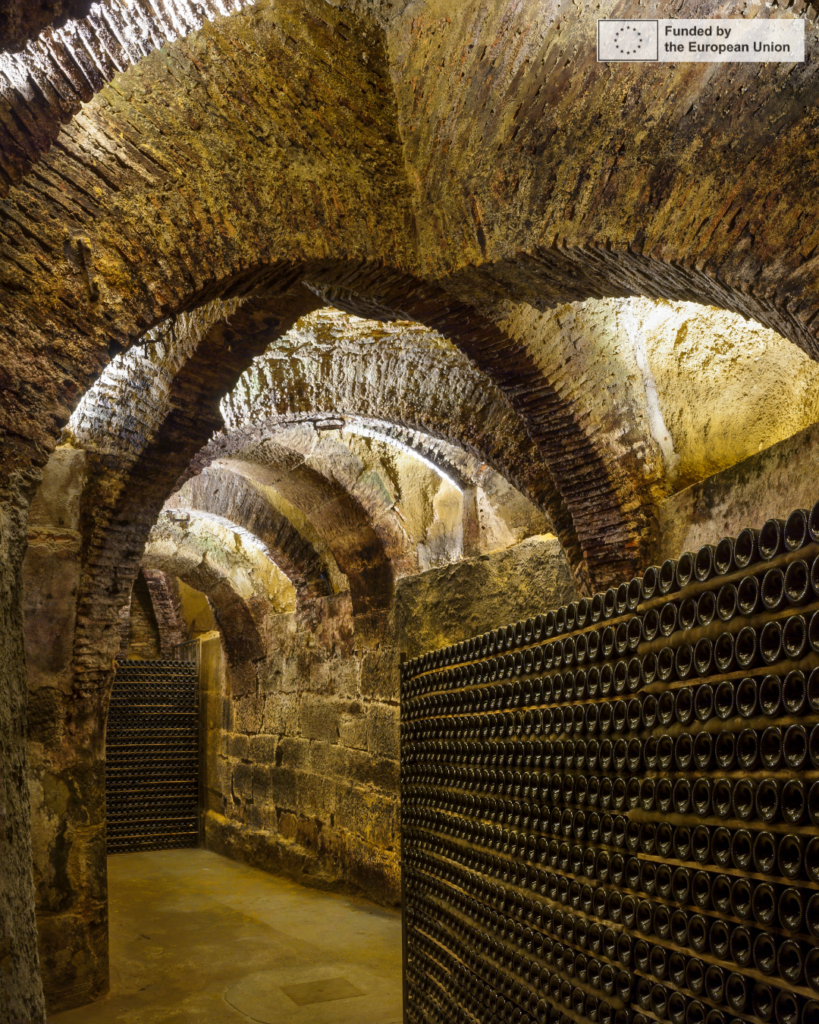
The underground cellars of this winery in Ollauri, some of which date back to the 15th century, are a true piece of our land’s history.
The most intimate or essential part of something can be described as its very depths. This is how the underground cellars of Conde de los Andes can be defined: spectacular caves excavated beneath the ground across three levels, with some sections dating back to the 15th century. This is the history of Rioja and its wines, preceding the Designation of Origin that is now celebrating its centenary. The treasure hidden beneath the surface of Ollauri is far older. “Wine has been made here since the 17th century,” says Javier Murúa. “And now it is up to us to preserve this heritage and give it all the prominence it deserves. It is our responsibility. We are investing in it,” he adds.
For the past eleven years, he has been at the helm, together with his father, Julián, of this winery, acquired from the Eguizábal family together with the historic underground cellar that gave rise to the wine company founded by Federico Paternina. At a depth of 40 metres, beneath the Churrumendi hill, around two kilometres of galleries run underground — the Murúa family has gradually expanded the facilities — while preserving the original architecture: the Mudéjar-style arches, barrel vaults, ashlar stonework, niches, vats and more. In short, all the work once carried out by Galician stonemasons with pick and shovel. It is precisely in honour of that work that one of Paternina’s historic brands is Banda Azul, whose label reflects the Galician flag.
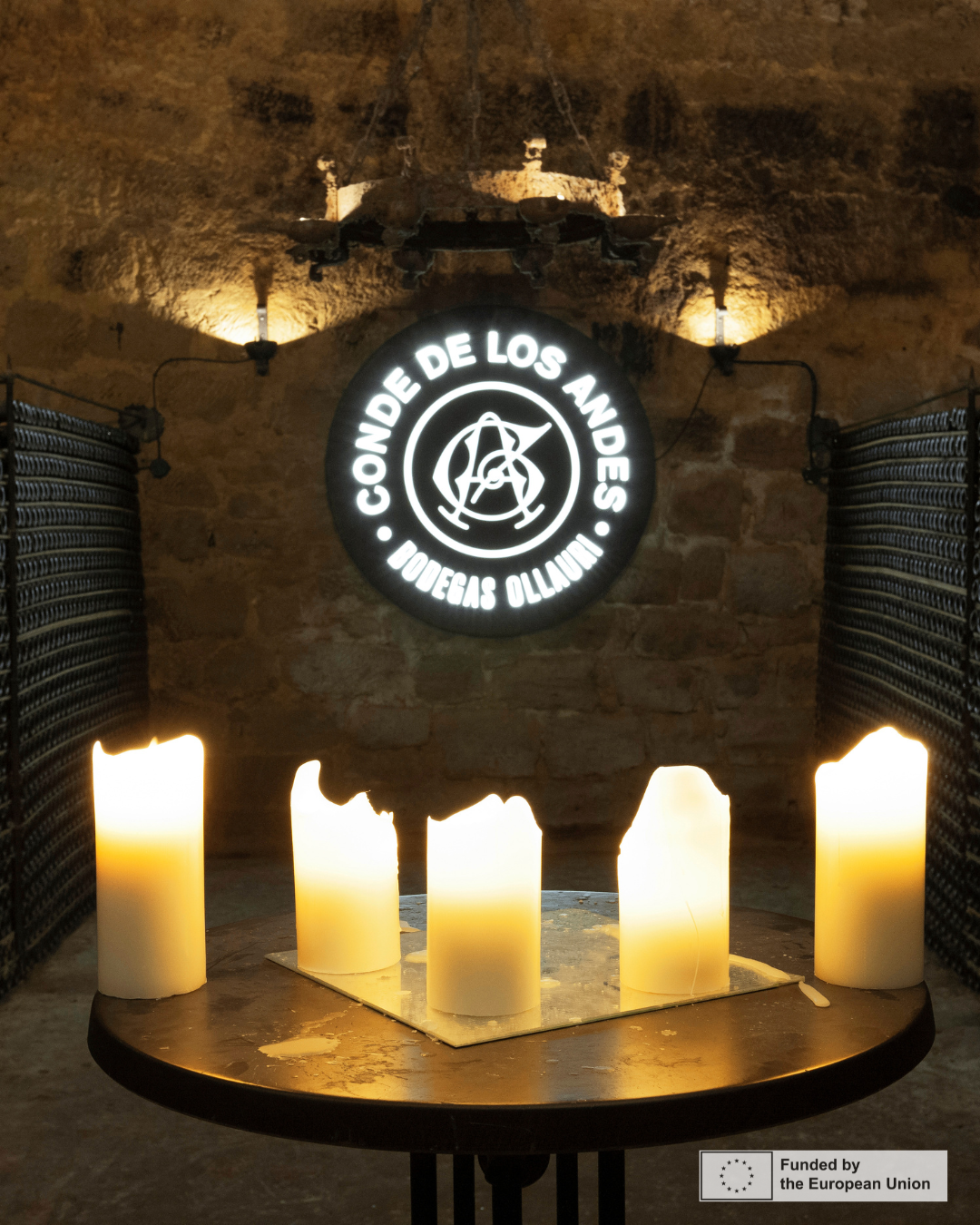
The emblematic Candiles, Flor and Gallegos cellars are some of the areas within this labyrinthine complex, which houses around half a million bottles from practically every vintage between 1892 and 2022. Over the course of its history, it has welcomed illustrious visitors, including the American writer and journalist Ernest Hemingway, accompanied by his wife, Mary Welsh, and his friend, the bullfighter Antonio Ordóñez, at the end of September 1956. Many tourists come precisely from the United States, and “they are surprised by what they find here, because they do not expect it,” says Javier Murúa proudly. He has sought to maintain “and respect the history we inherited with the purchase of the winery, while giving it our own approach and personality”.
Making wine again 90 years later
They built a new winemaking facility and, a decade ago, launched a wine on the market “made here — a white and a red — something that had not happened for almost ninety years”, as Paternina had moved to Haro in 1922. “We work with grapes from around twenty hectares spread across some fifty plots located in Ollauri, Haro, Briñas and the neighbouring Rioja Alavesa town of Labastida,” he explains. They have also been changing their ageing methods, moving from 100% ageing in 225-litre oak barrels to 500-litre foudres, as well as granite and concrete eggs.
Half of Conde de los Andes’ production goes to international markets, including the United States and the United Kingdom. Its range includes a red Tempranillo and a white Viura, together with Duermevela — “the modern version of the Gran Reserva,” Murúa points out — and Capítulos, a more daring line, a family of wines in which different vinifications are explored and which may vary depending on the vintage. The grapes used to make these wines come from century-old vines, in some cases planted in 1910.
“We have a great diversity of products and the capacity to serve very different markets and customers. It is important to understand how the supply chain works in order to know how wines are positioned, and it is also important to segment according to the type of customer you want to reach,” he says.
Conde de los Andes forms part of the Muriel Wines group, which brings together, in Rioja, the Ollauri winery alongside Muriel, Luis Alegre, Viña Eguía and Finca Montalvillo. The group also owns Pazo Cilleiro in Rías Baixas and Valdecuriel in Ribera del Duero. Its presence in three designations of origin and its constant contact with distributors and customers in around fifty countries worldwide — the group exports more than 80% of its production — allow Javier Murúa to speak with authority within the sector.
“The Rioja Designation of Origin needs to be more ambitious, rather than resigning itself to the idea that less wine will be sold, because that means an impoverishment of the region as a whole, with everything that entails,” he says.
In his view, the focus should not be placed solely on “how much surplus grape there is or how much vineyard needs to be uprooted”. He proposes going further and “talking about profitability, business opportunities and the importance of identifying the competition”.
The successful model that “Rioja was until a few years ago” has been disrupted by the pandemic and the consumption crisis, which has brought with it a fall in sales, “and now there are people having a difficult time”. For this reason, Murúa speaks of success in the past tense, but he is optimistic about the future. “We need to bring excitement to the consumer,” he insists. He concludes with two final appeals. “We must stop underestimating the recognition we have,” he says first. Secondly, he recalls that “demand is generated by Rioja, but value creation depends on each individual brand”